
2026.02.19 | Restoration at Fiscalini Ranch Preserve
Restoration is a key purpose of protecting Fiscalini Ranch Preserve. The conservation easement states that preserving and restoring the land’s natural resources is the main purpose of preserving the land.
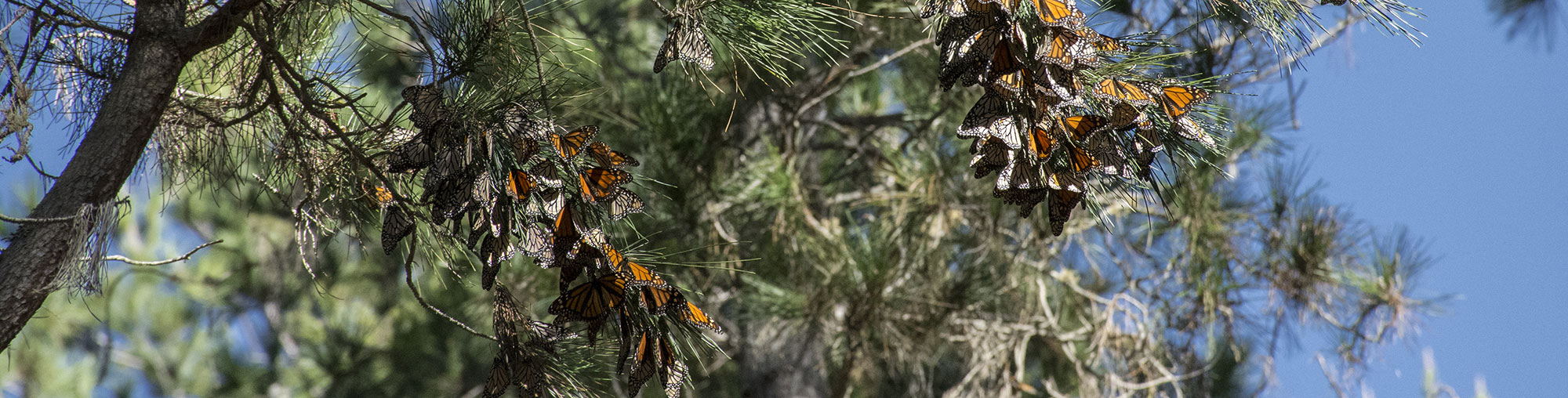
These natural resources include coastal areas along Santa Rosa Creek, oak and pine woodlands, wetlands, and habitat for several rare and protected plant and animal species. One of the most important species on the Ranch is the Monterey pine (Pinus radiata). This is one of the rarest forest types in North America. In the wild, Monterey pine grows in only a few small areas. Because of this, protecting and expanding this forest is a priority.
For more than 20 years, Friends of the Fiscalini Ranch Preserve has grown Monterey pine trees from local seeds and planted them on the Ranch by hand. During that time, the forest has expanded by about 25 percent, although storms have damaged some areas. Recently, FFRP has started planting native shrubs under the trees. These shrubs — such as toyon (Heteromeles arbutifolia), pink flowering currant (Ribes sanguineum var. glutinosum), bush monkey flower (Mimulus aurantiacus), and coffeeberry (Frangula californica) — help increase plant diversity and provide food and shelter for wildlife and pollinators.
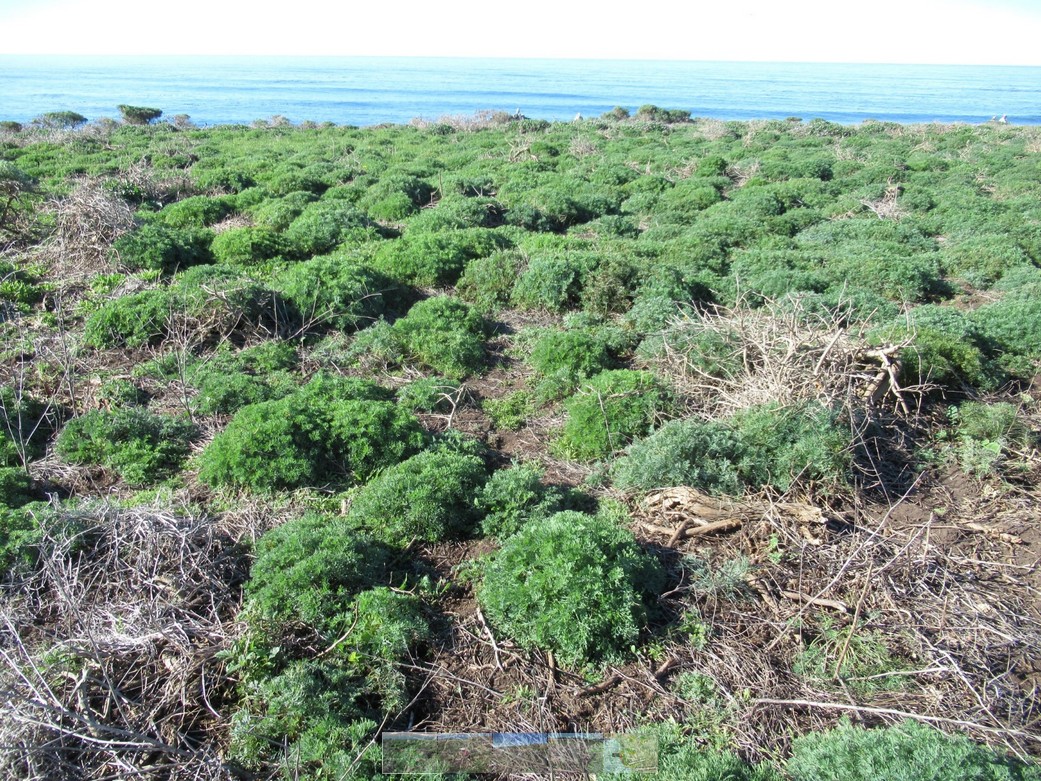
Restoration work along the coast focuses on removing invasive plants like mustard and ice plant. When these invasive species are removed, native plants have space to grow. Over time, wildflowers and native shrubs have returned to many areas. In some years, coastal bush lupine (Lupinus arboreus) shines bright. In other years, seaside fiddleneck (Amsinckia spectabilis) steals the show. Recently, coastal California poppy (Eschscholzia californica ssp. maritima) bloomed in a golden wave, dropping seeds for the future.
Volunteers also collect native seeds to spread in cleared areas. In addition, FFRP grows plants, such as sea cliff buckwheat (Eriogonum parvifolium), and compact cobwebby thistle (Cirsium occidentale var. compactum) to bring back places where ice plant once took over. Looking ahead, restoration efforts will also include coastal prairie, a rare grassland that supports wildlife, such as burrowing owls.
All this work shows what a caring community can do. Through seed collection, plant growing, invasive species removal, and volunteer support, restoration efforts continue to improve the health and diversity of habitats across the Ranch, fulfilling the promise of the conservation easement.