

Weekly Weeders
Volunteer · Land stewardship
Pull weeds with us, one morning a week.
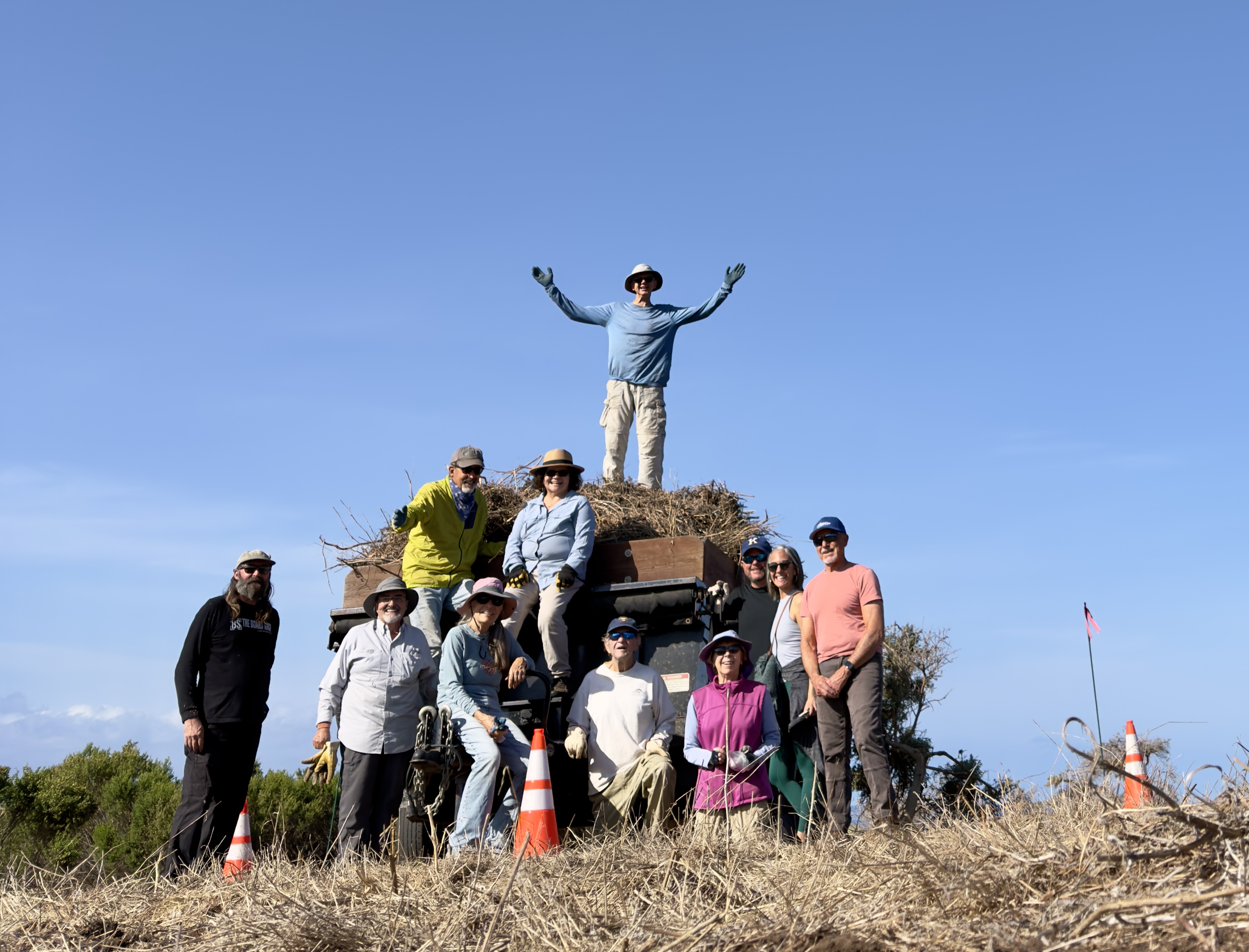
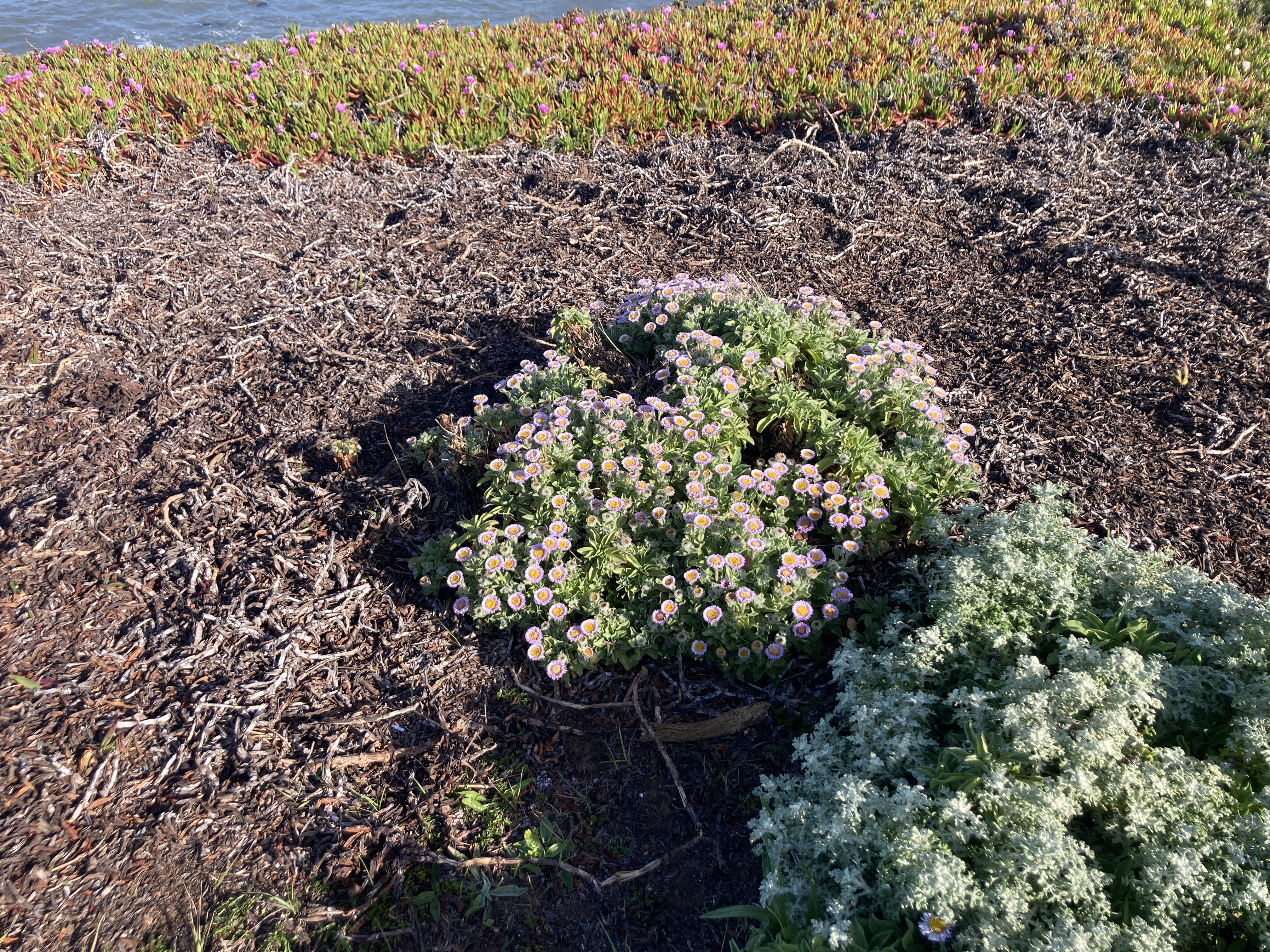
On the bluff south of Windsor, a patch of seaside daisies is hanging on inside a mat of South African ice plant. Every week a small crew of neighbors goes out and gives plants like those daisies a little more room. We'd like you to be one of them.
Why the weeds have to go
South African ice plant was at the very top of the invasive species list in the original survey of the Ranch. It came to California in the early 1900s to hold soil along railroad tracks, and Caltrans later planted it on roadsides.
On our bluffs it does the opposite of holding soil. The roots are shallow and the stems pile on top of each other until the mat gets heavy enough to slough off the cliff, taking topsoil with it. Along the way it crowds out native plants, takes their water, and makes the soil saltier.
Ice plant is the best-known target, but not the only one. Crews also go after mustard, thistle and kikuyu grass, among others, always in coordination with the Cambria Community Services District's Facilities and Resources Department, which manages the Preserve.
What a work day looks like
- 1
Meet the crew
Show up at 9 AM at the spot we send you, often on the Bluff or Marine Terrace Trails. A team leader will say hello and tell you where we're working that day.
- 2
Learn the plants
You'll get a quick lesson on what to pull, what to leave, and how to get the roots out. Then you're ready.
- 3
Work at your own pace
It's real work, but there's no quota and no competition. Take breaks, chat, watch for otters. Every bag counts.
- 4
Wrap up by 11
We haul out what we've pulled and look at the cleared ground. Stay for the whole session or leave when you need to.
What to bring
- Sturdy, closed-toe shoes
- Clothes you don't mind getting grubby, plus a layer for the fog
- A good pair of gloves (we have loaners if you forget)
- Your favorite clippers, if you have them
- Water and a hat
- A wheelbarrow, if you have one and don't mind bringing it
What we'll have
- Loaner tools for anyone who needs them
- Bags and hauling gear for the pulled weeds
- A team leader who knows the plants
- Loaner gloves and tick spray
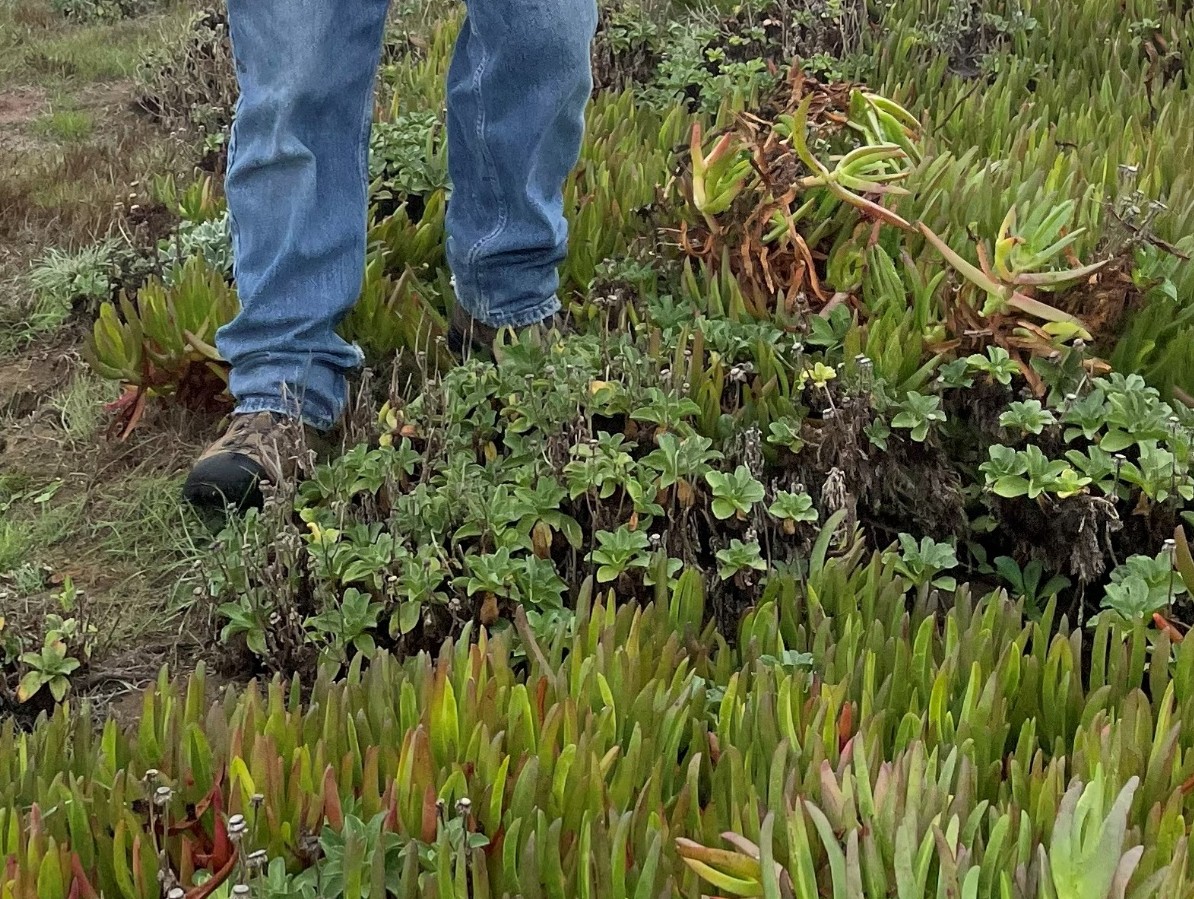
You'd be joining about 150 neighbors who already pitch in.
Our "Ranch Hands" groom trails, pull weeds, haul ice plant, take out diseased plants, and restore native habitat alongside the CCSD's Facilities and Resources Department.
Can't make it every week?
Come when you can. Commitments range from a single morning to year-round, and we're glad to see you either way.
And if pulling weeds isn't your thing, there's trail work, the restoration nursery, docent walks, school programs, and the quarterly Main Street cleanup. See all volunteer roles.
How to join
Send us a note at volunteer@fiscaliniranch.org or call the office at (805) 927-2856. Tell us which week you'd like to start, and we'll let the team leader know to look for you. You can also just show up. Nobody will turn you away.
Thank you for considering it. The Ranch belongs to all of us, and protecting and sustaining it for generations to come takes a lot of gloved hands.